Redefining Cybersecurity Leadership: Insights from Andres Andreu, Author of The CISO Playbook
In the ever-evolving landscape of cybersecurity, leadership demands more than technical expertise – it requires resilience, adaptability, and the ability to bridge the gap between business objectives and security imperatives.
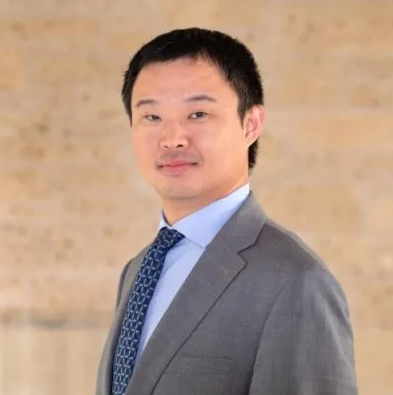
Andres Andreu, author of The CISO Playbook and a seasoned cybersecurity leader, offers a rare glimpse into the realities of the Chief Information Security Officer (CISO) role. From navigating boardroom politics to leveraging AI in the fight against cybercrime, Andres shares hard-earned insights that challenge conventional wisdom and redefine what it means to lead in this high-pressure field.
In this exclusive interview, Andres dives deep into the human side of cybersecurity, the evolution of the CISO role, and the transformative impact of AI on both defenders and adversaries. Whether you're an aspiring leader or a seasoned professional, his perspective is a must-read for anyone looking to thrive in the complex world of cybersecurity leadership.
The AI Summit Series: You describe "The CISO Playbook" as focusing on what cybersecurity leadership "really is" rather than what it "should be." What inspired this real-world approach, and what gap were you trying to fill?
Andres Andreu (AA): When I wrote The CISO Playbook, I was reacting to a pattern: a lot of material tells CISOs what the role should look like in a perfect world, or worse, what it's like from the perspective of some ivory tower CISO with grand resources. This material is not representative of the role in most places and does not reflect the messy realities we actually live in (e.g., board and/or corporate politics, security averse organizational cultures, incomplete data, unclear accountability, and unpleasant incidents with lawyers on the line while people are pointing fingers to deflect responsibility).
I decided to write the book I wish I’d had earlier in my career: something grounded in battle scars, not slogans. One to cover the gap between glossy “best practices” and what it actually takes to keep a business resilient, protect revenue, and survive in the role more than 18-24 months. The book focuses on what leadership really is in this role: selling your programs for funding, making hard trade-offs with imperfect information, influencing without control, protecting your people, and turning security from an IT and/or compliance cost center into a driver of trust and business growth.
The AI Summit Series: Your book emphasizes that a CISO needs to "be" many different things. What's the most surprising role or skill you think people don't realize a cybersecurity leader needs to master?
AA: One of the most surprising roles a CISO has to play is part psychologist, part anthropologist.
On the psychology side, the work is less about firewalls and more about behavior. Yes, you need to understand threat actors, AI, identity systems, and cloud architectures. But you also need to understand why a sales or business leader ignores a policy, why a developer bypasses controls to ship faster, and why a board member fixates on certain things. Your job is to read fear, ego, incentives, and cognitive bias, then design interventions that nudge people toward safer behavior without triggering outright resistance. This is behavior change at scale. In practice that means tailoring messages to different personalities, framing security as an enabler instead of a tax, and running internal “influence campaigns” that look a lot like what adversaries do, except in service of resilience instead of exploitation.
On the anthropologist side, you’re studying cultures, not policies and controls. Every organization is a set of tribes, sales, marketing, engineering, legal, finance, each with its own language, rituals, heroes, and taboos. If you drop a one-size-fits-all security program onto that, it gets ignored or bypassed. So you do fieldwork: sit in sales calls, join engineering standups, watch how deals close and code ships, map when each tribe is under maximum pressure (quarter-end, release week, audit season). You also treat artifacts (e.g., Jira tickets, Slack threads, pitch decks) as data about what the organization really values versus what some security policy claims.
That anthropological lens extends to adversaries as well. Threat actors are their own cultures with reputations, norms, recruitment pipelines, deadlines, and economic pressures. You’re not just defending against tools; you’re defending against human communities that learn and adapt.
My contention is that when a CISO combines psychology (individual motivations) with anthropology (group culture), they stop designing security at people and start designing it with and through them. That’s when the human side of cybersecurity becomes a force multiplier rather than your largest obstacle.
The AI Summit Series: With your extensive experience, how has the CISO role evolved since you started in cybersecurity? What would surprise someone about how different the job is today?
AA: When I started (early 90s), the “security person” was a legitimate technical expert in some dark corner of a room, configuring firewalls and intrusion detection systems. That person was a hybrid of a software engineer, system administrator, and security expert. The problems were technically challenging and there was not an abundance of information available, but the scope was also narrower.
Today, the CISO is a business leader who happens to specialize in cyber risk. You’re expected to understand revenue models, M&A, regulations across multiple jurisdictions, data ethics, AI governance, and the geopolitical risk around identity and data. You’re a business leader now, not a technology leader.
What surprises people is how little of the modern CISO role is actually technical. Outsiders see the hollywood hacker with a hoodie on that now wears a suit and makes money legitimately. But that is so far from reality, most modern day CISOs have never worked with green text on a black screen. The reality of CISO life is a combination of finance, legal, governance, vendor management, advising, investor discussions, and cross-functional leadership. To be deeply effective a CISO should have some technical depth, but their day is really dominated by seeking budget, alignment conversations, making trade-offs, and making risk legible to people who don’t live in this world of ours.
The AI Summit Series: You mention the challenge of balancing security with business objectives. Can you share a story about a time when you had to navigate this tension, and how you approached it?
AA: At one company, we faced a situation where business leaders made a non-negotiable decision that the use of MFA was negatively impacting business. This was on a customer facing web application. The security leader's instinct, in the face of this decision, is to fight to continue with MFA as that seems standard in modern times. Before any escalations I sat with business leaders to understand their driving forces for such a decision.
There was clear evidence that MFA led to slower customer onboarding and was negatively impacting revenue as users preferred an easier experience with competitors. This was about business survival and not “security versus sales”. The framing was “protecting future revenue and preventing a reputational event”. This business was clearly mapped to concrete business outcomes and I realized that in this case security was hurting business operations and the top-line. I had to negotiate in a way that security was not left with zero and yet we supported keeping the business moving.
When I faced this situation one business leader tried to be flexible and put the onus on me, if I could provide an alternate solution they were open to it. There was none, especially not in a timely manner. I negotiated for funding so that we could get deeper and expanded visibility into the relevant traffic flows. We, in turn, built some aggressive authentication detection and automation targeting both brute force attacks and session replays. It’s not a perfect solution (no security solution is) but this gave us the ability to catch and react to a large portion of these types of attacks.
That’s the balance: protect the downside as much as you can without strangling the upside.
The AI Summit Series: Your book covers "softer skills" like storytelling and communication. Why are these so crucial for cybersecurity leaders, and how did you learn their importance?
AA: Technical depth gets you into the room; financial literacy, storytelling, and communication keep you there and can allow you to thrive there.
If you can’t turn “identity risk” or “AI-driven recon” into a narrative that a business leader or board director can understand, with clear financial and operational implications, you won’t get the support and investment you need. Boards and companies don’t fund activity or controls, they fund outcomes: protected revenue, avoided downtime, regulatory assurance, brand trust.
I learned this the hard way. Early in my career, I walked into boardrooms with detailed technical slides and left with no support, no decisions. Over time, I started translating those same data points into simple stories: here’s an adversary that is targeting us….. Once I made that shift, things started to change. I was no longer seen as an IT person and my budgets, influence, and the pace at which we could actually reduce risk, all increased.
The AI Summit Series: At The AI Summit New York, you're speaking about "Adversarial Intelligence." Without giving away your presentation, how has AI changed the game for both cybercriminals and defenders?
AA: AI has fundamentally changed two things: facilitation and scale.
On the offensive side, adversaries are using generative models and agents to automate reconnaissance, generate highly convincing phishing and deepfakes, probe identity systems at scale, and blend into “normal” traffic patterns. They can now smoothly industrialize what used to require time and rare talent. Facilitation here covers speed to operationalization and the creation of sharp targeted personalization for effective campaigns.
On the defensive side, AI gives us the ability to identify signals (e.g., anomalies) across massive volumes of data. It empowers us to spot signals of interest across identity data, infrastructure, and user behavior, and to create adaptive controls and deception environments that force adversaries to burn resources and reveal themselves.
The core theme of my talk, “Adversarial Intelligence - How AI Powers the Next Wave of Cybercrime”, is that AI has effectively turned cybercrime into an intelligence discipline. Adversaries are no longer just launching isolated malware campaigns; they are building living, learning models of their target organization, its people, and its systems. They use generative models, autonomous agents, and deepfakes to continuously probe, profile, and manipulate at accelerated rates. AI gives criminals decision advantage: they see you earlier, target you more precisely, and adapt in real time when something blocks them.
The AI Summit Series: What motivated you to write a book and share your expertise? Was there a particular moment when you realized you had insights worth sharing with the broader cybersecurity community?
AA: I was the keynote speaker at a global conference hosted in a European country. I presented as I always do with a very direct and down to earth mode. I could tell the general crowd was not receptive to my style. But after I got off stage I was approached by a number of people that found my style and messaging refreshing. They explained to me that most of the other speakers gave them great sounding fluff that they could never use in their daily work struggles. I wrote The CISO Playbook after that experience as I realized people in this industry can benefit from real-world perspectives and experiences.
I also mentored a number of folks along my journey. I kept telling the same stories and giving the same advice in 1:1 conversations. I have seen too many talented leaders burn out or internalize failures that were actually structural. I experienced similar failures over the years and simply taught myself to treat those as great wins from a learning perspective. The book is my attempt to put those lessons, wins, and scars into a form that others can reuse, challenge, and improve.
The AI Summit Series: Your book includes insights from executive recruiters, salespeople, and venture capitalists. Why was it important to include these different viewpoints rather than just focusing on technical expertise?
AA: A CISO does not operate in a vacuum. On the contrary, their ecosystem of partnerships, influencing entities, and peers is invaluable. Executive recruiters have a great influence on who gets a particular CISO seat. Sales leaders impact CISOs as customers. Venture capitalists influence which risks and capabilities end up rewarded.
If I only told the story from the CISO’s perspective, I would do the audience a dis-service. They would miss the expectations and pressures coming from those adjacent stakeholders. I wanted readers to see how the role looks from the outside: what boards listen for, what investors worry about, what sales teams need to close deals in an ever changing cyber first world.
Including those disparate voices makes the book less of a solo memoir and more of a 360-degree view of cybersecurity leadership as a system embedded in business, capital, and human relationships.
The AI Summit Series: You mention "self-preservation" as an important area for CISOs. What does that mean in practice, and how do you help leaders maintain their effectiveness in such a high-pressure role?
AA: When I talk about “self-preservation,” I’m not talking about selfishness; I’m talking about sustainability and not making the role that of a “Chief Information Scapegoat Officer”. This is a high-pressure role that can consume your identity if you let it.
In practice, self-preservation means:
- Being crystal clear on what you own and what you don’t, then documenting and accepting that reality. Allow this to inform some of your initiatives so that you raise the likelihood of success..
- Building and communicating governance and metrics so decisions and risk are shared, not silently absorbed by the CISO.
- Maintaining options: a network, a reputation, and a plan if the organization becomes misaligned with your values.
- Protecting time and space to think, recover, and invest in your own learning.
I coach leaders to treat themselves like a critical system: you need redundancy, fail-safes, and maintenance windows. If you burn out, the organization loses one of its most important lines of defense.
The AI Summit Series: For someone attending The AI Summit who's considering a move into cybersecurity leadership, what's the most important quality they should start developing now?
AA: The single most important quality is the ability to translate, between adversaries and executives, between security reality and business impact.
If you’re aspiring to cybersecurity leadership, start now:
- Learn how your company actually makes money and where identity, data, and AI sit in that value chain.
- Practice explaining technical risks in simple, concrete business terms. Make sure to include financial impact (if risk is actualized and also costs to mitigate said risk) in those conversations.
- Develop an adversarial mindset: constantly ask, “If I were attacking this business, where would I go first, and why?”
If you can reliably turn complex, AI-accelerated risk into clear decision advantage that non-technical leaders understand and trust, you’re already operating like a future, business ready/savvy CISO.
As AI continues to reshape the cybersecurity landscape, leaders like Andres Andreu are paving the way for innovative strategies and resilient leadership. His session at The AI Summit New York, Adversarial Intelligence - How AI Powers the Next Wave of Cybercrime, promises to be an eye-opening exploration of how AI is transforming both the offensive and defensive sides of cyber risk.
)